


 En 2004, dans « Le droit comme idéologie », un ouvrage co-rédigé avec Annemie Schaus, paraissait un texte d’Olivier Corten sur la manière dont la colonisation violente et raciste du Congo belge avait été légitimée par des considérations de droit naturel, … un droit « naturel » qui allait plus tard être utilisé pour légitimer la décolonisation. Cette étude, reproduite par ailleurs dans « Le discours du droit international », un recueil paru chez Pedone en 2009, faisait partie d’un enseignement d’introduction au droit dispensé en première année à l’U.L.B. pour tous les étudiant.es en sciences politiques et sociales et en journalisme. Il est disponible ici en accès libre, dans le contexte des débats actuels sur le maintien des ravages du racisme en général, et sur la légitimité (que certain.es défendent toujours) de la colonisation du Congo en particulier.
Relire « Jusnaturalisme et légitimation du pouvoir : l’exemple du Congo belge » d’Olivier Corten
Publié le 17 juin 2020
Navigation
Présentation
Réalisations
Services
Publications
Ressources documentaires
L.L.M – Master
« Culture-pop »
- Du droit international au cinéma
- En musique : comme un air de droit international
- Le droit international (n’) est-il (que) littérature ?
- Du droit international par la bande (dessinée)
- Le droit international, en jeu (vidéo)
- Le droit international : bon pour le musée ?
- Le droit international sur les planches!
(function () {
function normalize(input) {
try {
const u = (input instanceof URL) ? input : new URL(input, window.location.href);
let p = u.pathname.toLowerCase().replace(/\/+$/, '');
return p === '' ? '/' : p;
} catch { return ''; }
}
function matches(linkPath, currentPath) {
if (!linkPath || linkPath === '/') return currentPath === '/';
if (currentPath === linkPath) return true;
const lp = linkPath.endsWith('/') ? linkPath.slice(0, -1) : linkPath;
return currentPath.startsWith(lp + '/');
}
function resetToggle(t) {
t.classList.remove('et_pb_toggle_open');
t.classList.add('et_pb_toggle_close');
const c = t.querySelector('.et_pb_toggle_content');
if (c) c.style.display = 'none';
const title = t.querySelector('.et_pb_toggle_title');
if (title) title.setAttribute('aria-expanded', 'false');
}
function openToggle(t) {
t.classList.remove('et_pb_toggle_close');
t.classList.add('et_pb_toggle_open');
const c = t.querySelector('.et_pb_toggle_content');
if (c) c.style.display = 'block';
const title = t.querySelector('.et_pb_toggle_title');
if (title) title.setAttribute('aria-expanded', 'true');
}
function highlightCurrent(resetAll = false) {
const container = document.querySelector('.sb-toggles');
if (!container) return;
const currentPath = normalize(window.location.href);
const toggles = Array.from(container.querySelectorAll('.et_pb_toggle'));
if (resetAll) {
container.querySelectorAll('a.current-link').forEach(a => a.classList.remove('current-link'));
toggles.forEach(resetToggle);
}
let best = { toggle: null, link: null, len: -1 };
for (const t of toggles) {
for (const a of t.querySelectorAll('a[href]')) {
const href = a.getAttribute('href');
if (!href || href.startsWith('#') || href.startsWith('mailto:') || href.startsWith('tel:')) continue;
const lp = normalize(href);
if (matches(lp, currentPath) && lp.length > best.len) {
best = { toggle: t, link: a, len: lp.length };
}
}
}
if (best.toggle && best.link) {
best.link.classList.add('current-link');
openToggle(best.toggle);
}
}
function ready() {
highlightCurrent(true); // reset complet une seule fois au départ
setTimeout(() => highlightCurrent(false), 300); // après init Divi
}
if (document.readyState === 'loading') {
document.addEventListener('DOMContentLoaded', ready);
} else {
ready();
}
window.addEventListener('load', () => highlightCurrent(false));
// MutationObserver : ne fait plus de reset, juste la logique du "meilleur match"
const mo = new MutationObserver(() => highlightCurrent(false));
mo.observe(document.body, { childList: true, subtree: true });
})();
Suivez nos réseaux
Notre prochain événement :
Conférences de René Provost et de l’association “Breaking the Silence”
La dernière News:
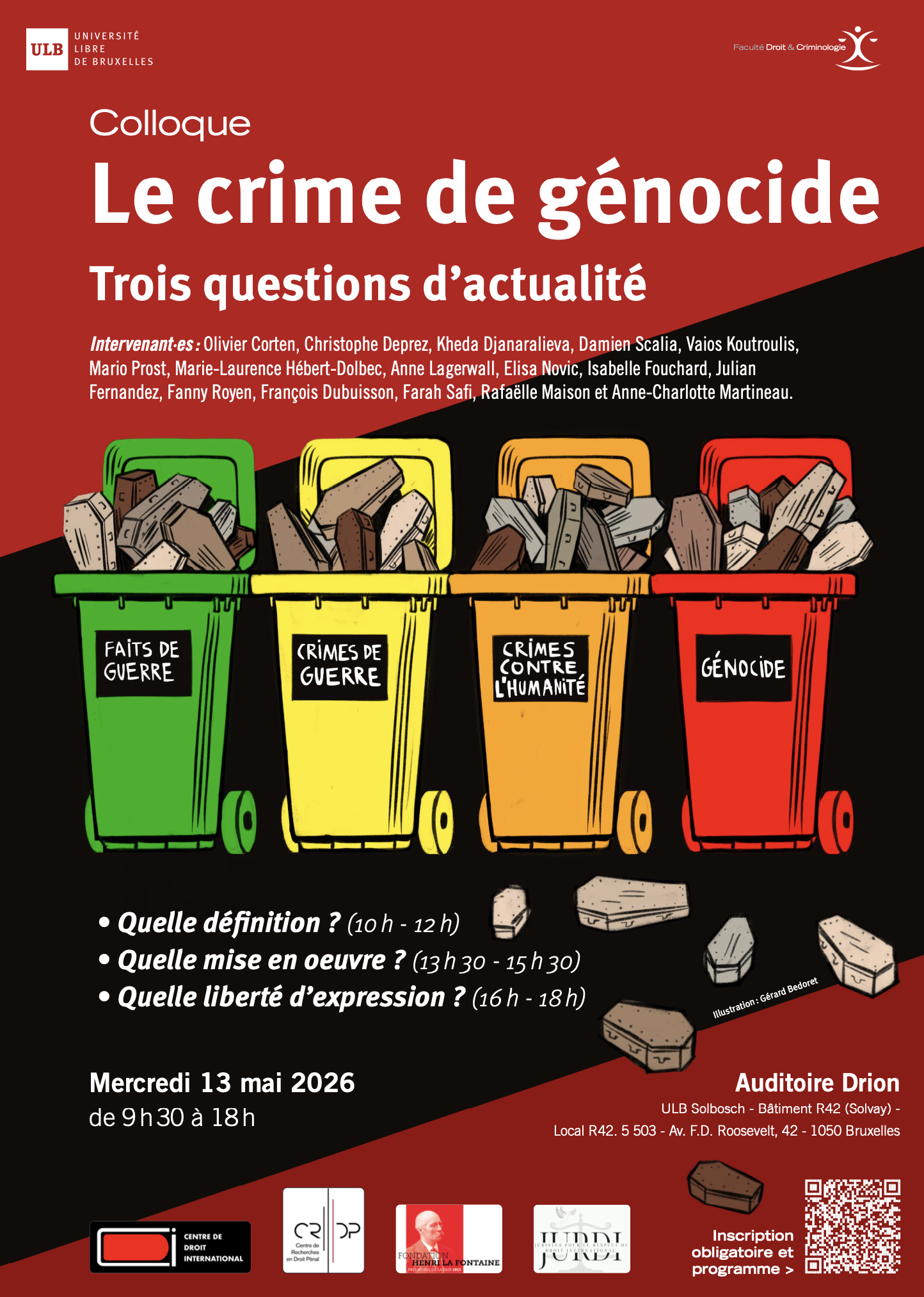
Colloque - Le crime de génocide : trois questions d’actualité, le 13 mai 2026
La dernière publication :

The Vienna Conventions on the Law of Treaties (Second Edition)